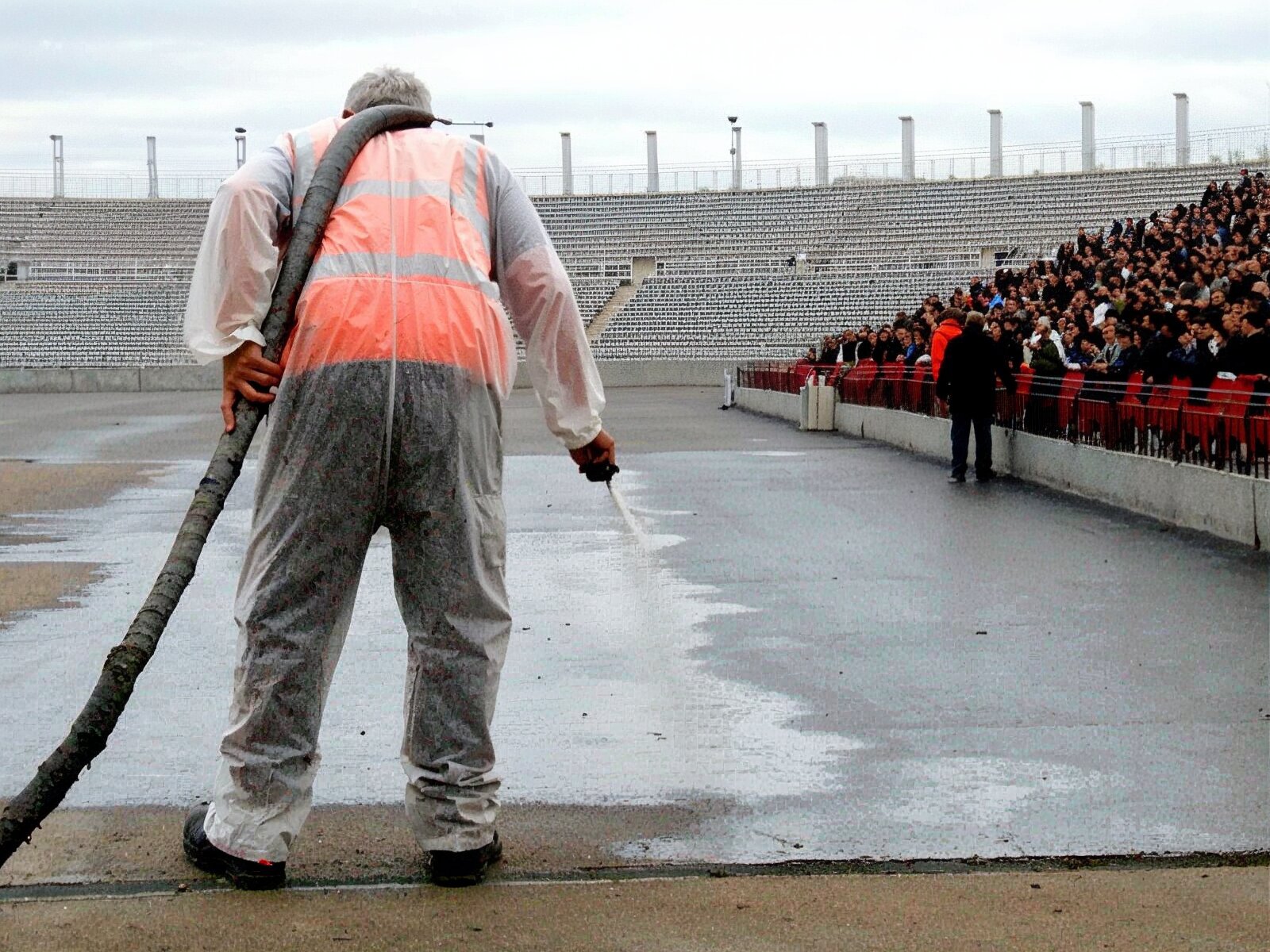
The Growing Pressure from Extreme Weather
Across the world, weather patterns have shifted dramatically, and with those changes, stadiums face serious challenges that few could have predicted just a few decades ago. News stories increasingly feature stadium closures and delayed events caused by flooding, structural damage, and unforeseen water intrusion that forces teams and spectators out of their seats. Stadiums that were once designed for mild and predictable conditions now stand exposed to rainfall that breaks records, storms that gather strength faster than forecasts can predict, and floods that rise higher than any engineer anticipated during initial construction.
Water damage rarely announces itself loudly; instead, it works its way slowly through tiny gaps and hidden cracks, often spreading beneath concrete walkways and resting within the steel frames that give stadiums their strength. When temperatures drop, any trapped moisture freezes, expanding with enough force to split thick concrete and push apart structural joints that once seemed secure. As these cycles repeat, even the toughest stadiums begin to show signs of wear that can compromise not only their appearance but also their ability to host large crowds safely.
In recent months, several major stadiums in North America and Europe have made headlines after announcing sudden repairs or emergency closures due to serious waterproofing issues linked to extreme weather events. These incidents reveal a troubling truth that many in the sports world now face: stadiums must be ready to withstand far more than the occasional rain shower, and failure to prepare invites long-term damage that can cost millions of dollars to reverse.
Why Polyurea Has Become the Solution of Choice
Engineers who specialize in stadium repairs increasingly turn toward polyurea, a spray-applied coating that forms a flexible, seamless barrier capable of protecting surfaces from water infiltration. Unlike traditional waterproofing methods that rely on membranes or sheets, polyurea creates a continuous protective layer that bonds directly to concrete, steel, and other common building materials, forming a tight seal that resists peeling and cracking even under harsh conditions.
Stadiums pose unique challenges for waterproofing because they endure far more than just rain. These massive venues must support the weight of thousands of people moving in unison, handle the vibrations caused by celebrations and loud concerts, and withstand extreme temperature swings that cause expansion and contraction in building materials. In these demanding environments, traditional coatings often fail because they lack the elasticity to adapt to constant movement, but polyurea remains flexible enough to stretch without tearing, even as temperatures rise and fall.
Several stadiums that previously struggled with recurring water damage have reported remarkable success after applying polyurea coatings, especially in high-traffic areas such as concourses, walkways, and upper decks where standing water tends to collect. Engineers who worked on these projects have published detailed case studies showing how polyurea not only stopped existing leaks but also prevented new ones from forming, thanks to its durable and adaptable nature.
The Science Behind Long-Lasting Protection
The reason polyurea performs so well lies in its unique chemical composition, which allows it to cure within minutes while forming an extremely strong bond with underlying surfaces. Once applied, the coating penetrates tiny pores in the concrete or steel, locking itself in place and creating a continuous surface that resists damage from water, chemicals, and physical wear. Unlike older waterproofing methods that rely on seams or adhesives, polyurea remains effective because it eliminates weak points where water might find its way inside.
Independent laboratory tests consistently show that polyurea coatings can survive thousands of cycles of expansion and contraction without losing their protective qualities. In stadiums, where temperature swings can stretch building materials beyond their original limits, this flexibility plays a crucial role in maintaining long-term performance. In addition to resisting physical stress, polyurea also stands up well to chemicals commonly found in stadium settings, including cleaning solutions, spilled drinks, and even oils from machinery or equipment used during events.
Facility managers appreciate that polyurea does not require frequent reapplications, which reduces both maintenance costs and disruption to scheduled events. This makes it an attractive option for stadiums that host games, concerts, and community events throughout the year, leaving little time for lengthy repair projects.
Waterproofing as a Core Part of Stadium Design
A growing number of architects and structural engineers now recognize that waterproofing cannot remain an afterthought in stadium construction. Instead, they integrate it early in the design process, treating it as a structural necessity rather than a cosmetic upgrade. This shift in thinking aligns with a broader trend in architecture, where designers plan for extreme weather events from the beginning, rather than assuming past climate patterns will continue.
Stadium projects today include advanced computer models that simulate not just average weather conditions, but also the most intense storms and floods that could realistically occur within the building’s lifespan. In these models, waterproofing plays a central role in preventing damage before it starts, protecting not only visible surfaces but also hidden supports and utility systems that are costly and difficult to repair once compromised.
Recent media coverage of new stadiums often highlights these forward-looking design choices, which include waterproofing systems capable of withstanding both heavy rainfall and storm surges. In one widely reported case, a stadium located near a hurricane-prone coast applied polyurea across exposed decks and service corridors. After a powerful hurricane struck the region, inspectors found the protective coating remained intact, with no water infiltration or structural damage reported, which helped the stadium avoid costly repairs and lengthy closures.
How Waterproofing Supports the Stadium Experience
Beyond its role in preserving buildings, effective waterproofing enhances the experience of everyone who visits the stadium. Fans rarely think about the membranes or coatings beneath their feet, but they notice dry seating areas, safe walking paths, and clean concourses that remain free from puddles, leaks, and water stains. By keeping these spaces dry and secure, polyurea coatings contribute to a comfortable, enjoyable atmosphere that keeps visitors returning season after season.
Long-term maintenance also becomes simpler for stadium owners and operators who choose polyurea as their primary waterproofing method. In many cases, maintenance crews already face significant workloads, and cutting down on constant patchwork repairs allows them to focus on other critical needs, such as electrical systems, HVAC equipment, or general facility upkeep. The lasting protection provided by polyurea allows stadiums to age gracefully, preserving their appearance and safety even as they host decades of events.
The Bigger Lesson from Recent Headlines
Stories of stadiums dealing with sudden closures or costly repairs serve as reminders that water, though often overlooked, poses one of the most persistent threats to large structures. No matter how well a stadium is built, ignoring waterproofing leaves it vulnerable to slow but steady deterioration that can ultimately lead to structural failure.
Polyurea’s growing role in stadium construction and maintenance reflects a wider cultural shift toward proactive protection and long-term resilience. Engineers, architects, and facility managers no longer aim merely to construct buildings that look impressive on opening day. Instead, they focus on creating venues that endure for generations, capable of withstanding whatever storms may come.
In the end, waterproofing may not grab headlines as quickly as player trades or championship wins, but it stands quietly as one of the most important investments any stadium can make in its future. The steady rise of polyurea proves that sometimes, the most effective solutions do not need to draw attention—they simply need to work, year after year.