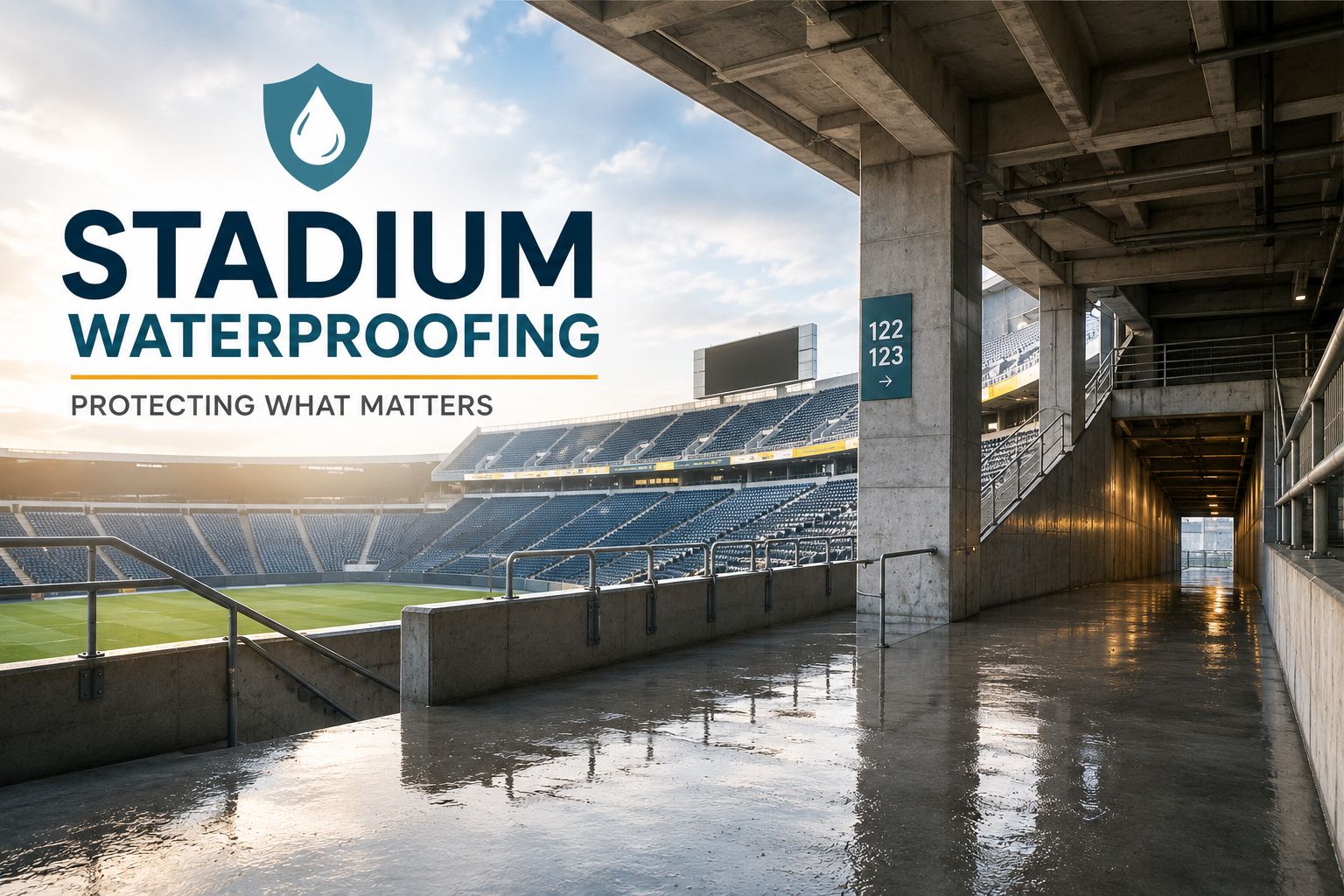
Stadiums take a beating. Tens of thousands of fans walking through concourses, rain pouring across open seating bowls, and constant foot and vehicle traffic through tunnels all add up to one of the toughest environments a building can face. Add in decades of freeze thaw cycles, UV exposure, and the sheer scale of these structures, and it becomes clear why stadium waterproofing is not just a nice to have. It is essential infrastructure.
This guide breaks down what stadium waterproofing actually involves, why different zones of a stadium need different approaches, and what goes into keeping these massive venues dry, safe, and structurally sound for decades.
Why Stadiums Are Uniquely Difficult to Waterproof
Most buildings deal with rain hitting a roof and running off through a gutter system. Stadiums are different. Large portions of the structure are directly exposed to the elements with no roof at all. Concourses sit above parking structures or storage areas, meaning any water intrusion does not just create a puddle, it can damage everything below. Seating bowls are often built from precast concrete sections with countless joints, each one a potential entry point for water. Tunnels and service corridors sit below grade or beneath heavy structural loads, where hydrostatic pressure becomes a real concern.
On top of the physical challenges, stadiums also deal with massive daily stress. A packed venue means thousands of pounds of foot traffic, vibration from crowd movement, and constant wear on walking surfaces. Waterproofing systems have to survive all of that while still doing their primary job of keeping water out.
The Main Zones That Require Waterproofing
Not every part of a stadium faces the same risks, which is why waterproofing strategy usually gets broken down by zone.
Concourses
Concourses are the walkways where fans move between seating areas, concession stands, and restrooms. These areas often sit above structural slabs with parking, storage, or mechanical rooms underneath. Because of the sheer foot traffic, concourse waterproofing needs to handle constant abrasion in addition to water resistance. A system that works beautifully in a lab but wears thin under real world traffic will fail fast in this environment.
Traffic bearing waterproofing membranes are typically used here, since they need to serve double duty as both a walking surface and a protective barrier. These systems must resist ponding water, resist UV exposure if the concourse is open air, and hold up under the repeated stress of foot and cart traffic on event days.
Seating Bowls
The seating bowl is the heart of the stadium, and it is almost always fully exposed to weather. Precast concrete risers, expansion joints, and drainage channels all need to work together to move water away efficiently. If waterproofing fails here, water can seep into structural joints, freeze and expand during colder months, and gradually cause cracking and spalling in the concrete.
Because seating bowls are made up of so many individual precast sections, joint sealing becomes just as important as the waterproofing membrane itself. A coating can be flawless, but if the expansion joints between sections are not properly treated, water will still find its way through.
Tunnels and Service Corridors
Tunnels present a different kind of challenge entirely. Many are built below grade or beneath heavy structural loads, which means they can face hydrostatic pressure from groundwater pushing against the structure from outside. Unlike an open seating bowl where water simply needs to drain away, tunnels often need a waterproofing system that can resist water being forced through the concrete under pressure.
These areas also see heavy vehicle traffic during events, from equipment carts to emergency vehicles, which means any waterproofing system here needs serious abrasion and impact resistance in addition to a reliable water barrier.
Roof and Canopy Structures
For stadiums with partial or full roof coverage, the roofing membrane becomes another critical waterproofing zone. These structures deal with UV exposure, wind uplift, and temperature swings, all while needing to remain lightweight enough not to overload the supporting structure.
Common Waterproofing Materials Used in Stadium Construction
Stadium waterproofing is rarely a one size fits all solution. Different zones often call for different materials, sometimes even within the same project.
Polyurea coatings have become a popular choice across multiple stadium zones because of their fast cure time, flexibility, and strength. Polyurea forms a seamless, watertight barrier and handles the constant expansion and contraction of concrete better than more rigid options. It also resists abrasion well, which makes it a strong fit for concourses and tunnels that see heavy foot and vehicle traffic.
Sheet membranes are self adhered or torch applied layers that offer reliable, consistent protection, often used in below grade tunnel applications where hydrostatic pressure is a concern.
Liquid applied membranes offer flexibility for complex geometries and detailing around drains, columns, and joints, which are common throughout stadium structures.
Crystalline waterproofing admixtures are sometimes added directly into the concrete mix during construction, allowing the concrete itself to develop self sealing properties as it cures, particularly useful for below grade structural elements.
Expansion joint systems are not technically a coating, but they play a critical role in stadium waterproofing since precast seating bowls rely on dozens or even hundreds of joints that all need to move without letting water through.
Why Flexibility Matters So Much in Stadium Structures
Concrete structures expand and contract with temperature changes, and stadiums experience this on a massive scale given their size. A rigid coating that cannot move with the structure is likely to crack over time, creating new entry points for water exactly where you do not want them.
This is part of why flexible systems like polyurea have gained traction in stadium projects. Instead of fighting against the natural movement of the structure, a flexible membrane moves with it, maintaining a continuous watertight seal even as the concrete shifts slightly with the seasons.
The Cost of Getting Waterproofing Wrong
Water intrusion in a stadium is not just a cosmetic problem. Left unaddressed, it can lead to corrosion of embedded steel reinforcement, freeze thaw damage to concrete, mold growth in enclosed spaces, and eventually costly structural repairs that dwarf the original cost of proper waterproofing.
There is also the safety angle to consider. Wet walkways in concourses and tunnels create slip hazards for fans and staff moving through crowded spaces. Deteriorating concrete in a seating bowl is a long term structural risk that no venue operator wants to deal with. Getting waterproofing right the first time is almost always cheaper than dealing with the consequences of getting it wrong.
Maintenance and Long Term Care
Even the best waterproofing system benefits from regular inspection and maintenance. Stadiums should have routine checks for cracking, ponding water, joint failures, and coating wear, especially in high traffic zones like concourses and tunnels. Catching small issues early, such as a failing joint sealant or a worn section of membrane, is far less expensive than addressing widespread water damage after it has already reached the structural elements.
Seasonal inspections are particularly important in climates with significant freeze thaw cycles, since these conditions put extra stress on waterproofing systems and can accelerate any existing weaknesses.
Planning a Stadium Waterproofing Project
For teams and facility managers planning a new build or renovation, a few practical steps can make a real difference in long term performance.
- Map out each zone of the stadium separately, since concourses, seating bowls, tunnels, and roofs all face different stresses and may need different systems.
- Prioritize flexible, seamless systems in areas with heavy joint work or structural movement, since rigid coatings are more prone to cracking over time.
- Do not overlook expansion joints, since even the best membrane will fail if the joints beneath it are not properly sealed and maintained.
- Factor in traffic loads when choosing surface coatings for concourses and tunnels, since these areas need abrasion resistance in addition to water resistance.
- Build in a regular inspection schedule after installation, rather than treating waterproofing as a one time task.
Final Thoughts
Stadium waterproofing is a far more complex undertaking than most fans ever think about, but it plays a massive role in keeping these venues safe, functional, and structurally sound for decades. From high traffic concourses to exposed seating bowls and pressure prone tunnels, each zone demands a tailored approach, often combining flexible coatings, sheet membranes, and carefully sealed expansion joints.
Getting it right from the start protects not just the concrete and steel, but the fans, staff, and athletes who fill these venues year after year. For teams planning a new build or facing an aging structure in need of renovation, investing in the right waterproofing strategy early on pays off many times over compared to dealing with water damage after the fact.
Leave a Reply