Author: Heidi Lee

  • Polyurea Coating for Stadiums vs. Traditional Waterproofing: Which Actually Protects Better?

    Polyurea Coating for Stadiums vs. Traditional Waterproofing: Which Actually Protects Better?

    Side by side comparison of polyurea coating versus traditional waterproofing membrane on stadium surface
    The choice between polyurea coating and traditional waterproofing can mean the difference between a stadium that lasts decades and one that faces constant, costly repairs.

    Pick up any stadium construction spec sheet from ten years ago and you’d likely find the same waterproofing solution recommended for nearly every horizontal surface: a sheet-applied bituminous membrane, torched or cold-applied, covered with a drainage layer and protection board. It was familiar. Contractors knew how to install it. Architects knew how to specify it. And for a long time, it worked well enough.

    Then stadiums got bigger, more complex, and more heavily used. Weather patterns became more extreme. Event schedules became more demanding, leaving less time between uses for maintenance. And the limitations of traditional waterproofing membranes — seams that failed, edges that lifted, materials that went brittle with age — became harder to ignore.

    Enter polyurea coating for stadiums. This spray-applied chemistry has transformed how engineers and facility managers think about waterproofing large venues. But the shift hasn’t happened because polyurea is new — it’s been available for decades. It’s happened because, in stadium applications specifically, the performance gap between polyurea and traditional systems has become impossible to overlook. Here’s why.

    Understanding Traditional Waterproofing Methods

    Traditional stadium waterproofing typically falls into a few broad categories. Sheet membranes — whether bituminous, TPO, EPDM, or modified bitumen — are applied as pre-formed sheets that are either mechanically fastened, fully adhered, or loose-laid under ballast. Cementitious coatings use portland cement compounds to seal concrete directly, offering a rigid but less flexible solution. Liquid-applied membranes, applied by roller or brush, create a thinner, more conformable barrier than sheet systems but often require multiple coats and extended curing times.

    Each of these approaches has decades of track record in general construction, and they continue to perform well in many applications. Their limitations only really show up under the specific demands of stadium use — high traffic, dynamic loads, chemical exposure, and extreme thermal cycling.
    Traditional sheet waterproofing membrane being installed on stadium concrete deck surface
    Sheet-applied membranes have been the industry standard for decades — but their seam-based construction creates inherent failure points in high-movement stadium environments.

    What Makes Polyurea Different

    Polyurea is a thermoset elastomer formed when an isocyanate component reacts with a resin blend containing amines. When sprayed through a specialized two-component system at high pressure, it reacts almost instantly — curing to a flexible, rubber-like solid in seconds rather than hours. This rapid cure is one of its most practically significant advantages in stadium settings, where downtime between events is measured in hours, not days.

    But the real structural advantage of polyurea lies in what it creates: a monolithic, seamless membrane. Every square inch of a polyurea application is continuous with every other inch. There are no overlapping sheets, no adhesive bonds at the edges, no seams where water can find a path through. When an applicator sprays around a drain, over a crack, or across a complex geometric transition, the membrane follows and integrates — leaving no gap in protection.

    That seamlessness is paired with exceptional elongation — most polyurea formulations can stretch 300% to 600% of their original length before tearing. In a structure that’s constantly moving, expanding, contracting, and absorbing vibration, that flexibility means the membrane moves with the building rather than cracking or delaminating under stress.

    The Seam Problem: Where Traditional Systems Consistently Fail

    If you talk to stadium maintenance professionals about waterproofing problems, the conversation almost always comes back to seams. Sheet membrane systems have them at every overlap, every transition, every penetration. Each seam represents a potential failure point — and in stadium environments, potential failure points tend to become actual ones faster than anywhere else.

    Consider what a seam experiences in a busy stadium concourse over a single NFL season. Tens of thousands of footsteps, combined with the vibrations from a crowd of 70,000 people reacting to a touchdown, create shear forces at those seam edges that weren’t necessarily designed into the original spec. Add freeze-thaw cycles and you have a recipe for progressive delamination that begins at the edges and spreads inward.

    The problem isn’t limited to horizontal surfaces. At vertical transitions — where a concourse deck meets a parapet wall, for example — sheet membranes must be turned up and terminated at a specific height. Those termination points are among the most common places where leaks originate, particularly after sealant at the termination bar degrades.

    Polyurea eliminates the seam problem entirely. When properly applied, the coating wraps over transitions, turns up walls, bridges cracks, and covers irregular geometries without any break in continuity. There’s no termination point to fail, no overlapping edge to lift, no adhesive to delaminate.

    Installation Speed and Venue Downtime

    For any stadium operating a full event calendar — professional sports seasons, concerts, community events, graduation ceremonies — the time available for waterproofing work is an asset as carefully managed as the budget itself. Traditional membrane systems require cure times measured in days. Some systems require dry conditions for application, ruling out entire windows of the installation season in high-humidity or high-rain environments.

    Polyurea changes the equation. Cure to foot traffic typically takes less than an hour after application. Large areas can be coated and returned to service within a single work shift. Application in temperatures ranging from freezing cold to extreme heat is feasible with properly formulated systems, expanding the available work window considerably.

    For a stadium that might have a three-day gap between a Saturday game and a Tuesday concert, the ability to waterproof a problematic concourse section and have it fully cured and ready before the next event is genuinely transformative. It converts maintenance from a season-defining disruption into a routine task that fits within normal operations.

    Close-up of flexible polyurea coating stretched over cracked concrete showing 400% elongation capability
    Polyurea’s extraordinary elongation — often exceeding 400% — allows it to bridge cracks and accommodate structural movement without compromising the waterproof barrier.

    Chemical and Abrasion Resistance

    Stadium concourses aren’t just exposed to weather. They’re exposed to cleaning chemicals used for post-event sanitation, carbonated beverages spilled in high volumes, cooking oils from concession operations, and de-icing salts applied to outdoor areas in cold climates. Traditional waterproofing membranes vary widely in their resistance to these chemical exposures — some degrade significantly over time when exposed to cleaning agents or acidic spills.

    Polyurea’s chemical resistance profile is one of its well-established strengths. Most properly formulated systems resist attack from the full range of chemicals typically encountered in stadium operations — including alkalis, dilute acids, and many solvents. This chemical stability means the protective qualities of the membrane hold up year after year, even under heavy cleaning regimens.

    Abrasion resistance is equally important. In high-traffic pedestrian zones, surfaces take significant punishment from foot traffic, wheeled equipment, and the constant friction of large crowds moving through tight spaces. Polyurea coatings specifically formulated for pedestrian applications can be made significantly harder and more abrasion-resistant than standard waterproofing grades, offering a single system that handles both structural protection and surface durability.

    When Does Traditional Waterproofing Still Make Sense?

    It’s worth being balanced here. Traditional waterproofing methods still make sense in certain stadium applications, and the choice isn’t always straightforward. Below-grade applications where access for spray equipment is limited may favor sheet membrane systems that can be applied with simpler tools. Green roof assemblies on stadium roof decks may use specific root-resistant sheet membranes that aren’t easily replicated with spray systems. Budget constraints on a minor repair project might make a localized liquid-applied patch coating the most practical choice for a specific problem area.

    The key is matching the system to the specific application. Polyurea’s advantages — seamless application, rapid cure, high elongation, chemical resistance — are most valuable in high-traffic, high-movement, high-exposure environments. That describes most of a stadium’s critical waterproofing zones, which is why the shift toward polyurea has been so broad in the industry.

    Long-Term Cost of Ownership: The Real Comparison

    Initial installed cost comparisons between polyurea and traditional membranes can go either way, depending on the specific products, application scale, and site conditions. Polyurea’s per-square-foot installed cost is typically higher than basic sheet membranes. But when total cost of ownership over a building’s lifespan is considered — including maintenance, reapplication cycles, repairs at seams and terminations, and the cost of water damage remediation when systems fail — polyurea-based approaches consistently come out ahead.

    A quality polyurea installation on a stadium concourse, properly applied over a prepared substrate, can be expected to perform for fifteen to twenty-five years with minimal maintenance. Many traditional sheet membrane systems require re-sealing at seams within five to ten years, and complete replacement cycles that occur more frequently than polyurea’s service intervals.
    Stadium concourse showing completed polyurea waterproofing application ready for foot traffic
    A properly applied polyurea stadium waterproofing system can be returned to service within hours of application — and can last 15 to 25 years with minimal ongoing maintenance.

    The Bottom Line for Stadium Decision-Makers

    The comparison between polyurea coating and traditional waterproofing in stadium settings isn’t really a close contest when the full picture is considered. For the high-demand, high-movement, high-traffic environments that define stadium infrastructure, polyurea’s seamless monolithic structure, rapid cure, flexibility, and chemical resistance make it the superior technical choice in most applications.

    That doesn’t mean it’s the right answer for every single situation — a nuanced specification process that matches materials to specific conditions is always better than blanket mandates. But for any stadium waterproofing professional evaluating options for concourses, seating decks, tunnels, or equipment rooms, polyurea deserves serious consideration as the primary system of choice.

    The quiet truth about stadium waterproofing is that it doesn’t make news when it works. The goal is to keep it that way — and in that effort, the right material choice makes all the difference. Learn more about how modern polyurea technologies are protecting venues in our article on real-world stadium waterproofing failures and what causes them.

    Frequently Asked Questions: Polyurea Coating for Stadiums

    Is polyurea coating safe for use in stadium food and beverage areas?

    Yes — properly formulated polyurea coatings designed for food-contact environments meet applicable safety standards and are widely used in stadium concession areas and kitchen floors. Specific formulations should be specified for these zones, as not all polyurea products are designed for direct food contact. Always verify compliance with local health and building codes.

    How long does polyurea coating application take on a stadium concourse?

    Application speed depends on surface area and complexity, but polyurea’s rapid cure time means large areas can typically be coated and returned to service within 24–48 hours. A 10,000 square foot concourse section can often be treated during a single-day application event, with the surface ready for foot traffic within one to two hours after coating.

    Does polyurea coating for stadiums work on both concrete and metal surfaces?

    Yes. Polyurea bonds effectively to concrete, steel, aluminum, and many other substrates commonly found in stadium construction. The key to reliable adhesion is proper surface preparation — surfaces must be clean, dry, and correctly profiled before application. Working with experienced applicators who understand stadium substrates is essential to achieving full bonding and optimal performance.

  • Stadium Waterproofing Failures: Real Disasters That Cost Millions (And What They Teach Us)

    Stadium Waterproofing Failures: Real Disasters That Cost Millions (And What They Teach Us)

    Crumbling stadium infrastructure caused by water infiltration and failed waterproofing systems
    Water intrusion in stadium infrastructure can cause millions in structural damage. Understanding stadium waterproofing failures is critical for facility managers.

    It doesn’t take a Category 5 hurricane to bring a major stadium to its knees. Sometimes all it takes is a clogged drain, a failed membrane, or a single overlooked expansion joint — and suddenly, you’re looking at a repair bill with six or seven zeros. Stadium waterproofing failures have quietly reshaped how architects, engineers, and facility managers think about construction. These aren’t abstract risks. They’re expensive, embarrassing, and — most importantly — almost entirely preventable.

    In this article, we dig into some of the most costly and instructive stadium waterproofing failures in recent history, what went wrong structurally, and what the industry has learned from each one. If you work in stadium construction, maintenance, or management, these lessons apply directly to you.

    Why Stadiums Are Uniquely Vulnerable to Water Damage

    Before examining individual failures, it helps to understand why stadiums face such extreme waterproofing challenges in the first place. Unlike a typical commercial building, stadiums must withstand thousands of people moving simultaneously, massive temperature swings between day and night, frequent exposure to standing water, and the constant vibration that comes with crowd activity and live music performances.

    These forces push building materials to their limits. Concrete expands and contracts. Steel flexes. Expansion joints shift. Every time these movements happen, tiny pathways open up for water to find its way inside. Once it does, the damage is rarely visible immediately — it spreads slowly, quietly, often going undetected until it has already compromised structural integrity, rusted rebar, or flooded equipment rooms.

    That slow, silent progression is exactly what makes stadium waterproofing failures so devastating. They don’t announce themselves loudly. They build for months or years before the true cost becomes clear.

    The Pontiac Silverdome: A Cautionary Tale in Infrastructure Neglect

    Few stadium stories illustrate the consequences of waterproofing neglect more starkly than the Pontiac Silverdome in Michigan. Once home to the Detroit Lions and a host venue for Super Bowl XVI, the Silverdome fell into disuse after the team moved to Ford Field in 2002. Without regular maintenance — and without active waterproofing systems being monitored — the building began to deteriorate rapidly.

    Water infiltrated the roof membrane. Freeze-thaw cycles split the concrete in the lower bowl. Eventually, the iconic Teflon roof collapsed under the weight of snow and ice that had accumulated because drainage systems were no longer functioning. What once cost over $55 million to build was ultimately demolished for a fraction of that price — after years of escalating repair estimates that were never acted upon.

    The Silverdome’s fate is an extreme example, but it reflects a pattern that plays out in less dramatic ways across stadiums worldwide: deferred waterproofing maintenance eventually becomes catastrophic, irreversible failure.

    Cracked concrete structural damage caused by freeze-thaw water infiltration cycles
    Freeze-thaw cycles accelerate concrete cracking when moisture is allowed to penetrate deep into the substrate.

    Olympic Venues: Built Fast, Waterproofed Last

    Olympic Games leave behind massive infrastructure, but that infrastructure doesn’t always age well. The rush to meet construction deadlines before opening ceremonies means waterproofing systems are sometimes applied hastily, with inadequate surface preparation or sub-standard materials. Several post-Olympic venues in Brazil, Greece, and South Africa have experienced significant water-related deterioration within just a few years of construction.

    In Athens, several 2004 Olympic venues began showing visible water staining, concrete spalling, and structural cracking within a decade — despite being relatively new by historical standards. Investigators and journalists who documented the decay pointed to rushed installation of waterproof membranes, poor drainage design, and the absence of long-term maintenance planning as primary causes.

    Brazil’s 2016 Olympic venues tell a similar story. Post-Games inspections found compromised seating structures, failed expansion joints, and widespread efflorescence — the white crystalline deposits that appear when water moves through concrete and carries dissolved salts to the surface. Each of these signs points to the same root problem: water getting in where it shouldn’t.

    These Olympic failures carry an important lesson for any large venue project: speed should never come at the expense of proper waterproofing application. Cutting corners during construction creates exponentially higher costs during the building’s operational life.

    The Roof Deck Problem: Where Most Failures Begin

    In the stadium waterproofing industry, roof decks and elevated pedestrian concourses are considered the highest-risk zones for water intrusion. Rain collects on these surfaces, drains slowly, and creates sustained hydrostatic pressure on whatever membrane sits beneath. If that membrane has even a pinhole-sized failure — from wear, improper installation, or movement — water finds it.

    One of the most common patterns engineers see in stadium inspections is what’s known as delamination: the waterproofing membrane begins to separate from the concrete substrate beneath it. This happens gradually, usually starting at high-traffic zones where foot traffic and thermal cycling are most intense. Once delamination begins, it spreads. Water gets beneath the membrane, travels laterally, and eventually makes its way down into lower structural levels — sometimes emerging as a visible leak in a completely different section of the building than where the failure originated.

    This is why polyurea-based waterproofing systems have gained significant traction in stadium applications. Unlike sheet membranes that rely on seams and adhesive bonds, polyurea is spray-applied as a seamless, monolithic barrier that bonds at the molecular level with the concrete beneath it. Delamination is far less likely because there are no seams, no adhesive failure points, and the material remains flexible enough to move with the structure without cracking.

    Professional applying polyurea spray coating to concrete surface for stadium waterproofing protection
    Spray-applied polyurea creates a seamless, flexible barrier — significantly reducing the risk of delamination and long-term waterproofing failure.

    When Expansion Joints Fail: Hidden Costs in Plain Sight

    Expansion joints are the deliberate gaps built into large concrete structures to allow for movement. They’re a necessary part of stadium construction — without them, the entire structure would crack under thermal stress. But they’re also one of the most persistently problematic waterproofing zones in any stadium.

    Sealants used in expansion joints degrade over time. They become brittle in cold temperatures, lose adhesion in wet conditions, and physically tear when structural movement exceeds their design capacity. When they fail, water enters directly into the joint gap and can travel significant distances before emerging as a visible leak somewhere else entirely.

    Several NFL stadiums built in the 1970s and 1980s have reported recurring expansion joint failures that required complete reinstallation of joint systems across entire concourse levels — work that often had to be done between seasons due to the complexity and scale involved. The labor and material costs alone can run into millions of dollars, not counting the business disruption of closing sections during repairs.

    Modern approaches to expansion joint waterproofing now incorporate flexible hybrid systems that combine mechanical components with spray-applied membranes at the joint transitions — reducing the likelihood of failure at these critical junctions.

    Stadium expansion joint with polyurea waterproofing sealant to prevent water intrusion
    Expansion joints are among the most vulnerable waterproofing zones in any stadium — requiring specialized sealing systems that can flex without failure.

    Below-Grade Failures: The Invisible Threat

    Not all stadium waterproofing failures happen at the roof or concourse level. Some of the most expensive problems occur underground — in tunnels, locker rooms, equipment storage areas, and utility corridors that sit below the water table or adjacent to saturated soil.

    Hydrostatic pressure — the force exerted by groundwater pushing against a below-grade structure — is relentless. It doesn’t vary with the weather or season in the same way surface water does. It pushes constantly against walls, floor slabs, and joint transitions. If the waterproofing system on a below-grade wall loses its negative-side seal, water enters and can flood electrical rooms, corrode structural steel, and create conditions that can take months and significant resources to remediate.

    Several major renovation projects in North American stadiums have discovered that below-grade waterproofing systems installed during original construction in the 1970s and 1980s had reached the end of their useful life. In some cases, facilities had been managing slow leaks for years with temporary patches before a comprehensive retrofit was undertaken. The cost to properly re-waterproof an entire below-grade level — including surface prep, application, and associated repairs — regularly reaches into the hundreds of thousands of dollars.

    What These Failures Have in Common

    Looking across the most costly and visible stadium waterproofing failures of recent decades, several common threads emerge. Deferred maintenance is the single most frequent contributor — stadium operators who delay inspections and routine re-sealing consistently face larger, more expensive problems down the road. Material failure is also common, particularly in older venues where waterproofing products from earlier generations have reached the end of their designed service life.

    Inadequate surface preparation before membrane application is another recurring theme. Even the best waterproofing material will fail prematurely if it’s applied over a substrate that’s contaminated, poorly profiled, or not properly dried. And finally, poor drainage design — whether through inadequate slope toward drains or undersized drainage infrastructure — contributes to prolonged water contact with surfaces that eventually leads to membrane fatigue and failure.

    The Cost of Getting It Wrong vs. Getting It Right

    Industry professionals who specialize in stadium maintenance frequently point to the same economic reality: proactive waterproofing costs a fraction of reactive repair. A full-scale polyurea application on a stadium concourse might cost several hundred thousand dollars. A complete structural remediation of a failed concourse — including concrete demolition, rebar replacement, drainage system rebuilding, and membrane reapplication — can easily cost ten to twenty times more.

    Beyond the direct financial cost, there’s also the business cost of unplanned closures. When a stadium section must be shut down for emergency repairs, ticketing revenue, concession sales, and sponsorship fulfillment are all affected. For venues that host dozens of events per year, even a partial closure for a few weeks can represent a significant financial setback that dwarfs the cost of the original preventive treatment.

    Lessons the Industry Is Applying Today

    The good news is that the stadium construction and maintenance industry has absorbed these lessons in meaningful ways. New stadium projects now routinely include waterproofing as a core design element rather than an afterthought. Spray-applied polyurea systems are being specified in structural drawings from the earliest design phases, rather than being selected as a last-minute application product before a venue opens.

    Facility management teams at existing venues have also become more sophisticated in their approach to waterproofing inspections and maintenance. Rather than waiting for visible signs of failure — staining, cracking, or active leaking — proactive programs now use infrared scanning, ground-penetrating radar, and systematic core testing to identify waterproofing degradation before it becomes a structural problem.

    The combination of better materials, earlier integration into design, and more rigorous ongoing maintenance is shifting the trajectory of stadium waterproofing from a reactive to a proactive discipline. The failures documented above will always serve as reminders of what’s at stake — but they’re increasingly becoming the exception rather than the rule as the industry raises its standards.

    The Invisible Work That Makes the Difference

    Stadium waterproofing rarely makes headlines when it works. Nobody tweets about the dry concourse or the locker room that stayed water-free through a decade of heavy use. But the failures — the flooded equipment rooms, the crumbling concourses, the emergency closures — those tell a story about what happens when moisture protection isn’t taken seriously.

    The real lesson from every stadium waterproofing failure is simple: water will always find the weakest point. The job of every engineer, contractor, and facility manager is to make sure there isn’t one. For more insights into how modern polyurea systems are solving these challenges, explore our other articles on advanced stadium waterproofing technologies.

    Frequently Asked Questions: Stadium Waterproofing Failures

    What is the most common cause of stadium waterproofing failure?

    Deferred maintenance is the single most common cause of stadium waterproofing failures. When inspections are skipped and minor issues are patched rather than properly repaired, moisture infiltration spreads unseen through the structure — eventually leading to failures that are significantly more expensive than the original preventive treatment would have been.

    How long does stadium waterproofing typically last?

    The lifespan of stadium waterproofing depends heavily on the system used. Traditional sheet membranes typically require re-sealing or replacement within 5–10 years in high-traffic areas. Quality polyurea-based systems, when properly applied over prepared substrates, can perform for 15–25 years with minimal maintenance.

    Can existing waterproofing failures be repaired without major reconstruction?

    In many cases, yes — particularly if the underlying structural damage is limited. Spray-applied polyurea can be applied over cleaned and prepared existing surfaces, providing a new protective layer without full demolition. However, when water damage has reached the rebar or caused significant concrete delamination, partial structural reconstruction may be unavoidable before new waterproofing is applied.

  • How Modern Waterproofing Technologies Are Saving Stadiums from Climate Extremes

    How Modern Waterproofing Technologies Are Saving Stadiums from Climate Extremes


    The Growing Pressure from Extreme Weather

    Across the world, weather patterns have shifted dramatically, and with those changes, stadiums face serious challenges that few could have predicted just a few decades ago. News stories increasingly feature stadium closures and delayed events caused by flooding, structural damage, and unforeseen water intrusion that forces teams and spectators out of their seats. Stadiums that were once designed for mild and predictable conditions now stand exposed to rainfall that breaks records, storms that gather strength faster than forecasts can predict, and floods that rise higher than any engineer anticipated during initial construction.

    Water damage rarely announces itself loudly; instead, it works its way slowly through tiny gaps and hidden cracks, often spreading beneath concrete walkways and resting within the steel frames that give stadiums their strength. When temperatures drop, any trapped moisture freezes, expanding with enough force to split thick concrete and push apart structural joints that once seemed secure. As these cycles repeat, even the toughest stadiums begin to show signs of wear that can compromise not only their appearance but also their ability to host large crowds safely.

    In recent months, several major stadiums in North America and Europe have made headlines after announcing sudden repairs or emergency closures due to serious waterproofing issues linked to extreme weather events. These incidents reveal a troubling truth that many in the sports world now face: stadiums must be ready to withstand far more than the occasional rain shower, and failure to prepare invites long-term damage that can cost millions of dollars to reverse.


    Why Polyurea Has Become the Solution of Choice

    Engineers who specialize in stadium repairs increasingly turn toward polyurea, a spray-applied coating that forms a flexible, seamless barrier capable of protecting surfaces from water infiltration. Unlike traditional waterproofing methods that rely on membranes or sheets, polyurea creates a continuous protective layer that bonds directly to concrete, steel, and other common building materials, forming a tight seal that resists peeling and cracking even under harsh conditions.

    Stadiums pose unique challenges for waterproofing because they endure far more than just rain. These massive venues must support the weight of thousands of people moving in unison, handle the vibrations caused by celebrations and loud concerts, and withstand extreme temperature swings that cause expansion and contraction in building materials. In these demanding environments, traditional coatings often fail because they lack the elasticity to adapt to constant movement, but polyurea remains flexible enough to stretch without tearing, even as temperatures rise and fall.

    Several stadiums that previously struggled with recurring water damage have reported remarkable success after applying polyurea coatings, especially in high-traffic areas such as concourses, walkways, and upper decks where standing water tends to collect. Engineers who worked on these projects have published detailed case studies showing how polyurea not only stopped existing leaks but also prevented new ones from forming, thanks to its durable and adaptable nature.


    The Science Behind Long-Lasting Protection

    The reason polyurea performs so well lies in its unique chemical composition, which allows it to cure within minutes while forming an extremely strong bond with underlying surfaces. Once applied, the coating penetrates tiny pores in the concrete or steel, locking itself in place and creating a continuous surface that resists damage from water, chemicals, and physical wear. Unlike older waterproofing methods that rely on seams or adhesives, polyurea remains effective because it eliminates weak points where water might find its way inside.

    Independent laboratory tests consistently show that polyurea coatings can survive thousands of cycles of expansion and contraction without losing their protective qualities. In stadiums, where temperature swings can stretch building materials beyond their original limits, this flexibility plays a crucial role in maintaining long-term performance. In addition to resisting physical stress, polyurea also stands up well to chemicals commonly found in stadium settings, including cleaning solutions, spilled drinks, and even oils from machinery or equipment used during events.

    Facility managers appreciate that polyurea does not require frequent reapplications, which reduces both maintenance costs and disruption to scheduled events. This makes it an attractive option for stadiums that host games, concerts, and community events throughout the year, leaving little time for lengthy repair projects.


    Waterproofing as a Core Part of Stadium Design

    A growing number of architects and structural engineers now recognize that waterproofing cannot remain an afterthought in stadium construction. Instead, they integrate it early in the design process, treating it as a structural necessity rather than a cosmetic upgrade. This shift in thinking aligns with a broader trend in architecture, where designers plan for extreme weather events from the beginning, rather than assuming past climate patterns will continue.

    Stadium projects today include advanced computer models that simulate not just average weather conditions, but also the most intense storms and floods that could realistically occur within the building’s lifespan. In these models, waterproofing plays a central role in preventing damage before it starts, protecting not only visible surfaces but also hidden supports and utility systems that are costly and difficult to repair once compromised.

    Recent media coverage of new stadiums often highlights these forward-looking design choices, which include waterproofing systems capable of withstanding both heavy rainfall and storm surges. In one widely reported case, a stadium located near a hurricane-prone coast applied polyurea across exposed decks and service corridors. After a powerful hurricane struck the region, inspectors found the protective coating remained intact, with no water infiltration or structural damage reported, which helped the stadium avoid costly repairs and lengthy closures.


    How Waterproofing Supports the Stadium Experience

    Beyond its role in preserving buildings, effective waterproofing enhances the experience of everyone who visits the stadium. Fans rarely think about the membranes or coatings beneath their feet, but they notice dry seating areas, safe walking paths, and clean concourses that remain free from puddles, leaks, and water stains. By keeping these spaces dry and secure, polyurea coatings contribute to a comfortable, enjoyable atmosphere that keeps visitors returning season after season.

    Long-term maintenance also becomes simpler for stadium owners and operators who choose polyurea as their primary waterproofing method. In many cases, maintenance crews already face significant workloads, and cutting down on constant patchwork repairs allows them to focus on other critical needs, such as electrical systems, HVAC equipment, or general facility upkeep. The lasting protection provided by polyurea allows stadiums to age gracefully, preserving their appearance and safety even as they host decades of events.


    The Bigger Lesson from Recent Headlines

    Stories of stadiums dealing with sudden closures or costly repairs serve as reminders that water, though often overlooked, poses one of the most persistent threats to large structures. No matter how well a stadium is built, ignoring waterproofing leaves it vulnerable to slow but steady deterioration that can ultimately lead to structural failure.

    Polyurea’s growing role in stadium construction and maintenance reflects a wider cultural shift toward proactive protection and long-term resilience. Engineers, architects, and facility managers no longer aim merely to construct buildings that look impressive on opening day. Instead, they focus on creating venues that endure for generations, capable of withstanding whatever storms may come.

    In the end, waterproofing may not grab headlines as quickly as player trades or championship wins, but it stands quietly as one of the most important investments any stadium can make in its future. The steady rise of polyurea proves that sometimes, the most effective solutions do not need to draw attention—they simply need to work, year after year.

  • The Role of Advanced Waterproofing In Modern Stadiums

    The Role of Advanced Waterproofing In Modern Stadiums

    Why Waterproofing Matters in Stadium Design

    Modern stadiums present a unique set of challenges when it comes to building durability. They carry the weight of massive attendance, unpredictable weather, and long cycles between major renovations. Yet, behind every successful structure lies one constant: protection from water. If ignored, moisture finds its way into expansion joints, decks, tunnels, and seating infrastructure. Once there, it begins to corrode steel, split concrete, and compromise public safety. The solution is neither new nor complex—but it demands precision. Effective waterproofing keeps the structure intact without disrupting the experience for those inside.


    The Trouble with Moisture Intrusion

    In stadium design, water doesn’t need a large opening. Small voids near penetrations, seams, or drains become entry points. From there, water expands, freezes, and pushes apart bonded materials. This is where technologies like polyurea waterproofing provide value that far exceeds their visual footprint. Once applied, polyurea forms a continuous membrane that bonds to a variety of surfaces—steel, concrete, and composite decking among them. It cures quickly, which keeps construction timelines on track, and it flexes with movement rather than cracking under stress.


    Environments That Demand More Than Basic Protection

    Few building types test materials the way stadiums do. Seating bowls collect standing water. Concession areas introduce grease, heat, and cleaning chemicals. Tunnels and service corridors experience traffic from vehicles and heavy equipment. Ordinary waterproofing systems struggle in such conditions. Coatings must perform under both constant use and long periods of inactivity. That contradiction forces designers and contractors to look for solutions proven under extreme wear.


    Polyurea’s Flexibility Across Surfaces

    Polyurea coatings meet that demand in part because they adapt. The formulation adjusts for thickness, cure time, or slip resistance, depending on the needs of the space. This versatility allows builders to coat horizontal decks, vertical walls, and even overhead features without using separate systems. That continuity reduces failure points. It also reduces maintenance.


    Renovation and the Cost of Long-Term Thinking

    The scale of investment behind major arenas only emphasizes the need for long-lasting systems. With each decade, the cost to repair increases. Entire stadium renovations now operate on timelines as long as the buildings themselves. Consider the renovation concepts currently being explored in Kansas City. These plans reflect more than cosmetic changes. They anticipate structural upgrades to keep the site usable for another generation. In that context, every system—drainage, expansion, membrane—must earn its place.


    Learning from Industry Insight

    When architects plan these builds, they often consult data from industry reports and specialists. Publications like polyurea magazine provide insight into how polyurea performs under conditions that mirror stadium usage. Contractors can learn which blends to use where, how to manage surface prep, and how to apply coatings at scale. Meanwhile, websites like polyurea waterproofing explain why the chemical properties of polyurea make it one of the most reliable methods for sealing exposed or high-risk concrete.


    History and Lessons from Past Stadiums

    Those looking to understand the broader trends can turn to legacy reporting on waterproofing sports stadiums. These pieces break down past failures and document how facilities corrected them. From leaks in concourses to full deck failures, the lessons remain the same. When coatings fail, the costs increase. A small leak allowed to continue across seasons can damage electrical systems, rust rebar, or cause concrete to spall from the inside.


    Integrating Waterproofing from the Start

    What sets apart modern waterproofing from earlier efforts isn’t just better chemistry. It’s better timing. Coatings are now applied earlier in the build process. That shift prevents water from reaching subsurface layers in the first place. When done properly, waterproofing becomes part of the foundation, not an afterthought.


    A Long-Term View of Structural Health

    Stadiums are more than venues. They are civic investments, gathering places, and long-term commitments. Their ability to last depends not only on the quality of their concrete or the reach of their sightlines, but on how well they handle the simplest problem in architecture: water. Coatings like polyurea don’t attract attention. They don’t appear in highlight reels. But their role defines how the structure ages.


    Conclusion: Prevention Over Repair

    For those responsible for maintaining these facilities, the choice comes down to prevention or repair. And in the case of stadiums—where downtime costs millions—prevention remains the smarter path.

  • How Stadiums Stay Dry: The Hidden Work of Long-Term Waterproofing

    How Stadiums Stay Dry: The Hidden Work of Long-Term Waterproofing

    Stadiums face more water than most buildings. From rain sweeping through rows of empty seats to snow melting into concrete joints, moisture shows up in places no one expects. A stadium’s design may draw attention for its arches, roof spans, or seating capacity, but the structures that last tend to succeed because of what lies beneath the surface. Waterproofing plays a quiet, constant role in keeping those structures safe and usable, year after year.

    Concrete, though strong, doesn’t resist water on its own. Cracks open slowly. Expansion joints move. Traffic, temperature, and time create paths for moisture to reach steel. Once water finds its way inside, corrosion begins. It’s slow at first—almost unnoticeable—but over time, rust expands inside the rebar and begins to separate the concrete from itself. That damage doesn’t just look bad. It puts the structural integrity of the stadium at risk.

    Preventing that process requires more than one solution. Builders and maintenance teams use membranes, coatings, sealants, and drains—each selected for where it goes and what it must endure. Some products go under turf. Some coat walkways. Others line tanks, walls, or underground tunnels. The goal always stays the same: keep water out, keep people safe.

    Among the options for surface protection, polyurea waterproofing continues to show advantages in stadium settings. Applied with spray equipment, polyurea forms a flexible, fast-curing barrier that bonds to concrete and expands with movement. Unlike rigid barriers that crack under pressure, polyurea moves with the stadium. It also cures quickly, allowing teams to resume work without long delays. Over time, this cuts down on maintenance cycles and prevents water intrusion before it begins.

    For those exploring the broader space of waterproofing, it’s easy to get lost in technical claims. But the work itself comes down to one thing: stopping water before it causes damage. In that sense, the best systems rarely draw attention. When they work well, they stay invisible. No water stains. No musty smell. No surprise failures years down the line.

    While large commercial facilities turn to polyurea-based solutions for their durability, even homeowners often look for simple options like waterproof paint to seal basement walls or garage floors. These do not serve the same purpose or scale as stadium coatings, but they reflect the same goal. Moisture never waits, and prevention always costs less than repair.

    To understand how polyurea works in these roles, resources such as polyurea industry websites and platforms like polyurea magazine provide insight from professionals who apply coatings on bridges, stadiums, tanks, and infrastructure every day. They know how the chemistry works, but more importantly, they understand the conditions in the field. No coating matters unless it holds up where it’s sprayed.

    The next time you walk through a stadium, the parts you don’t see will likely keep it standing. Under the concrete and behind the walls, waterproofing systems do their work without applause. They don’t make the game happen. But they make sure weather doesn’t stop it. That quiet reliability defines good engineering—and keeps crowds dry, even when the sky opens up.

  • What Abandoned Stadiums Reveal About Modern Infrastructure

    What Abandoned Stadiums Reveal About Modern Infrastructure

    When Stadiums Go Silent

    Some stadiums once roared. They held crowds, broadcast games, and became symbols of their cities. Now, a few sit empty. On sites once packed with fans, rust gathers. Concrete cracks. Weeds climb. On a popular online list-based publication, one article explored these abandoned stadiums and what they leave behind. The topic raises a question most cities avoid: what happens when the crowds leave?

    Beneath the Surface

    A stadium requires more than maintenance. It demands power, plumbing, drainage, and structure. When teams move or events dry up, those systems stop working. Nature moves in. Water seeps through joints. Steel corrodes. Freeze-thaw cycles widen every crack. Without attention, the structure loses its shape.

    The story of abandoned stadiums spreads across countries. In the United States, Canada, Brazil, Greece, and South Africa, stadiums built for world-class events now sit idle. Each structure once represented pride, but without use, that pride faded. The problem often begins below the surface. Drainage systems fail. Retaining walls shift. Subfloors collapse.

    Why Structures Fail

    In some cases, neglect follows debt. Cities that borrowed to build cannot afford to maintain. In others, new teams demand better facilities, leaving older stadiums behind. Either way, the result feels the same. A once-public space becomes fenced, locked, and forgotten.

    The Role of Polyurea

    Polyurea coatings could change how these buildings age. Though not a cure for abandonment, polyurea protects the systems that hold a stadium together. When applied to concrete or steel, it seals out water and shields against chemical wear. Roofs, decks, walkways, and seating areas last longer when protected. Underground, polyurea can line tunnels, basins, and mechanical vaults. By sealing these areas, crews reduce decay.

    Preserving What Remains

    Some cities now look to coatings before closing a site. When a stadium moves into partial use—maybe only for small events—maintenance shifts from expansion to preservation. Instead of replacing surfaces, managers apply protective coatings. Polyurea sets quickly. It resists moisture and UV exposure. It bonds without primers on most substrates. These qualities reduce labor time and extend the life of aging structures.

    Where Decay Begins

    In abandoned sites, the absence of coatings shows. Ingress points allow water to settle. Concrete that once held firm now crumbles at corners. Exposed rebar rusts and expands, forcing apart slabs that once stayed tight. Once damage begins, it spreads. Without intervention, each winter deepens the cracks.

    Repurposing Stadiums

    Some stadiums get repurposed. In those cases, polyurea becomes part of the restoration. Cities that turn stadiums into parks, markets, or concert venues must first repair what’s left. Spray-applied coatings let them work without tearing down. Workers clean the surface, assess structural soundness, and apply polyurea to preserve what remains.

    A Coating That Holds

    Because polyurea bonds at the molecular level, it does not separate once applied. That adhesion makes it useful on verticals, overheads, and irregular shapes. In stadiums where geometry complicates access, this trait saves time. Rather than rebuild, crews can reinforce.

    Climate Demands Performance

    In tropical regions, humidity speeds decay. Polyurea blocks that moisture. It keeps warm, wet air from penetrating slab joints and expansion cracks. In colder climates, the coating resists frost damage. It flexes with temperature swings, absorbing the stress without peeling or breaking.

    Stop the Clock

    A stadium might not fall overnight. But once decline begins, it moves fast. The roof leaks. Water runs down walls. Freeze expands it. Rebar bursts through. Seats detach. Once damage becomes visible, recovery becomes expensive. Polyurea offers a way to hold the line earlier.

    Preventing Failure in Active Stadiums

    For stadiums still in use, the lessons apply. Maintenance costs rise with age. Drainage channels clog. Waterproofing fails. Instead of waiting for damage to show, facilities teams now choose prevention. Polyurea helps them work fast and return spaces to service quickly. It requires no long cure time. It doesn’t off-gas. It bonds to metal, concrete, wood, and some plastics. These qualities fit the shifting needs of modern stadiums.

    Making More from One Space

    As urban density increases, stadiums serve more than one purpose. They host games, shows, markets, and community events. That traffic wears down surfaces. Protective coatings like polyurea slow the wear and help cities stretch their investment.

    Reuse Over Replacement

    Not every stadium can be saved. But those with structural soundness left can be stabilized. The cost to coat and preserve falls well below the cost to rebuild. That math drives new decisions in infrastructure policy. Instead of building new, cities now consider what they can keep.

    A Look at the Past

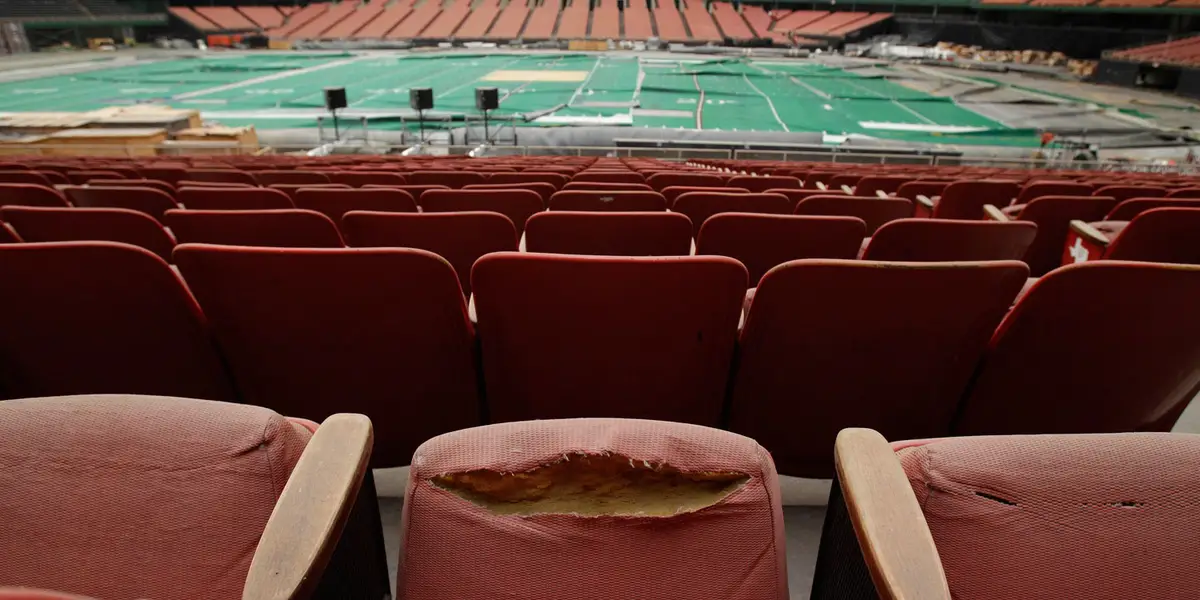
    The stories on Listverse.com give names to the forgotten sites. They show photos of cracked seats, flooded fields, and halls filled with silence. These images carry weight. They reveal what time does when nothing stops it.

    Coatings that Protect the Present

    Polyurea will not fill the stands. It will not restart the games. But it can slow the damage. It can give cities time. Time to plan, to decide, to adapt. In a world where costs rise and climate shifts, that time holds value.

    A Better Way Forward

    The next time a city plans a stadium, it may think differently. Coatings may enter the design stage, not just the repair phase. Polyurea may protect basins, beams, and bleachers from day one. That shift—from reaction to prevention—could change how stadiums last.

    More Than Just Concrete

    These structures mean more than sports. They gather people. They carry memory. When they fall, something gets lost. Polyurea won’t preserve the past, but it can protect the present. In doing so, it may keep future stadiums from meeting the same end.

  • Keeping Stadiums Dry: The Work Behind the Scenes

    Keeping Stadiums Dry: The Work Behind the Scenes

    The Structural Importance of Waterproofing

    Modern stadiums serve as cultural landmarks. They host sporting events, concerts, and large gatherings. These structures bear heavy loads, both literal and environmental. Constant exposure to water—from rainfall, groundwater, and internal systems—poses a significant threat to their integrity.

    Stadium waterproofing is not merely a finishing detail. It is a structural safeguard. Left unaddressed, water infiltration leads to concrete deterioration, corroded reinforcement, and mechanical failure. To prevent such outcomes, facility managers integrate robust waterproofing systems into both new construction and ongoing maintenance.


    Multiple Water Entry Points Require Layered Solutions

    Stadiums face water intrusion from every direction. Rain hits open seating areas. Wind drives moisture into joints and cracks. Groundwater exerts hydrostatic pressure on subgrade walls. Each point of exposure demands a targeted response.

    Concrete by nature is porous. While structurally strong, it absorbs moisture unless sealed. To counter this, crews apply waterproof membranes that bond to the concrete surface and prevent water ingress. The selection of materials depends on location, exposure, and load.

    In elevated areas such as concourses and roof decks, coatings must withstand both pedestrian traffic and environmental wear. In below-grade areas, the challenge shifts toward resisting constant underground moisture. Systems in these areas must include drainage management alongside sealing components.


    Roofing Systems Protect Infrastructure Below

    Roof assemblies in stadiums must resist ponding, expansion, and rapid thermal shifts. Even minor failures lead to widespread internal damage. When water enters through a poorly sealed roof, it often spreads to wiring, lighting, and communications equipment.

    Flat or low-slope roofs require continuous membranes, often applied in sheets or through spray systems. Proper application ensures that the material forms a monolithic barrier with no seams vulnerable to failure. These systems rely on detailed surface preparation, consistent weather conditions, and precise material mixing.

    Ongoing maintenance remains essential. UV exposure degrades most sealants over time. Thermal expansion causes materials to shift. Trained crews must inspect and reinforce vulnerable sections on a routine basis.


    Exposed Seating Areas and Drainage Design

    Stadium seating, especially in open-air arenas, introduces another level of complexity. Rainfall must be directed away from concrete substrates through integrated drain systems. If water pools or becomes trapped, it begins to degrade the slab.

    To prevent this, engineers install elastomeric membranes beneath the seating structure. These coatings accommodate movement while sealing against moisture. In many systems, a drainage mat is added below the membrane. It collects water and directs it to exit points without allowing it to contact the concrete.

    Effective polyurea waterproofing systems are well-suited for these areas. Polyurea forms a highly durable, flexible barrier that adheres quickly and cures rapidly. Once applied, it withstands heavy use, weather extremes, and the abrasion of high foot traffic.


    Subsurface Facilities Require Specialized Attention

    Locker rooms, utility corridors, and storage areas often sit beneath seating decks. These zones remain vulnerable to both surface water and groundwater infiltration. Because they house critical infrastructure—such as plumbing, HVAC, and electrical systems—they require the highest level of protection.

    Waterproofing in these areas begins during construction. Contractors use additives in the concrete mix, apply coatings to both positive and negative sides of the walls, and install vapor barriers. In existing structures, crews retrofit systems to resist pressure from the surrounding soil.

    Subsurface pressure builds over time. If the waterproofing fails, moisture enters through cracks and penetrations. To counter this, many stadiums now rely on polyurea or hybrid coatings to maintain a watertight seal. These systems move with the building, minimizing stress on the seal during freeze-thaw cycles or settling.


    Expansion Joints Present Constant Risk

    All large buildings shift. Concrete expands and contracts with temperature changes. Steel frames move under dynamic loads. Expansion joints absorb these shifts—but they also introduce one of the most common failure points in any stadium.

    Each joint must remain watertight while allowing movement. Sealants must stretch and compress without breaking their bond to the concrete. If the bond fails, water enters quickly.

    In high-traffic areas, exposed joints require added protection. Installers often use metal covers, double-seal systems, or reinforced joint assemblies. Routine inspections allow crews to identify early failures and replace materials before they compromise structural integrity.


    The Contrast Between New Builds and Repairs

    New construction allows seamless integration of waterproofing systems. Engineers can design with materials and application sequences in mind. Contractors can access exposed substrates and apply full-coverage membranes before enclosing structures.

    By contrast, retrofitting existing stadiums introduces challenges. Work must take place between events. Crews navigate around installed seating, concessions, and other infrastructure. Access becomes limited. Every task requires planning and coordination.

    Despite these obstacles, repairs are essential. A delayed waterproofing project leads to greater costs over time. Moisture spreads. Surfaces degrade. Mold forms in inaccessible areas. Routine maintenance avoids these outcomes.


    The Role of Material Selection

    No waterproofing system lasts forever. Some degrade under sun exposure. Others become brittle in cold climates. Material selection must align with environmental conditions, traffic levels, and design lifespan.

    Polyurea-based solutions have become a preferred choice across the industry. industry publications and third-party testing data provide ongoing insights into product performance, installation techniques, and real-world results.

    When installed correctly, polyurea systems offer durability, elasticity, and chemical resistance. They bond to diverse substrates and adapt to complex geometries. These qualities make them well-suited for stadium applications, where failure is not an option.


    A Small Leak Leads to Big Problems

    A leak that starts as a surface stain can become a major repair. Water accelerates corrosion. It weakens structural components. It damages seating and support equipment. It spreads unseen beneath coatings and finishes.

    A proactive approach prevents long-term issues. Trained professionals evaluate vulnerable zones and apply reinforcement before visible damage appears. Preventative waterproofing costs far less than emergency repair.

    Patrons notice when the infrastructure fails. They remember wet seats, slippery ramps, or the smell of damp concrete. A well-maintained stadium builds trust—and keeps fans coming back.


    The Work Behind the Game

    Spectators focus on the game, not the structure. But behind every successful event lies careful planning and invisible protection. Stadium waterproofing ensures that each space—whether on the roof, under the stands, or beneath the field—remains secure.

    This work rarely draws attention, but it plays a vital role in stadium performance. It preserves assets. It protects investments. It upholds safety.

    As standards improve, and materials evolve, professionals continue to refine how they manage water. With the right tools and training, they ensure that even the largest venues can stay dry—game after game.

  • 10 Unbelievably Unique Stadiums That Redefine Architecture and Sports

    10 Unbelievably Unique Stadiums That Redefine Architecture and Sports

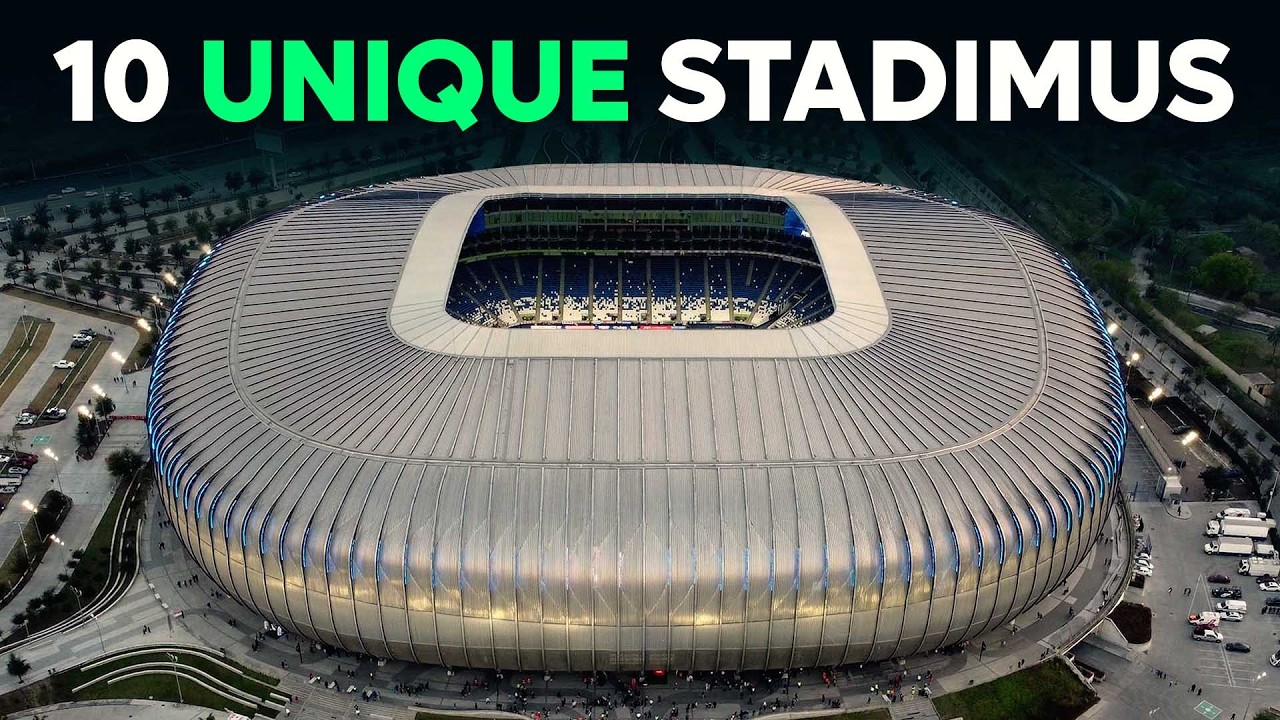
    Stadiums are not only places where sports and events are held, but are also great architectural masterpieces, which represent cultural and social importance, as well as unique and new approaches to building. Some of the stadiums, however, take on an entirely different shape – inspired by local fauna, or maybe alien crafts landing on our planet. Here are some of them:

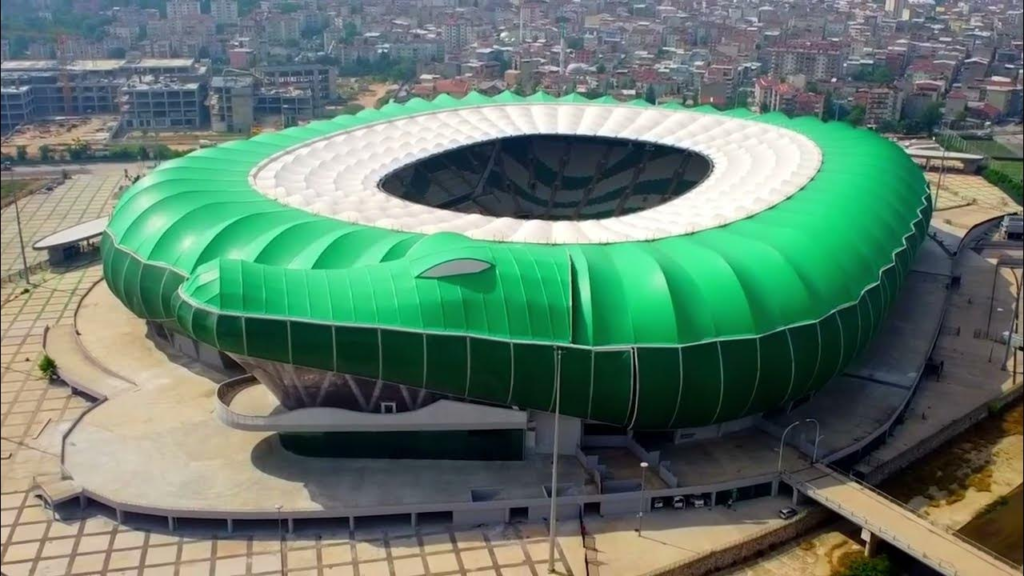
    1. Timsah Park, Turkey

    Timsah Park in Bursa is where the Bursaspor football club plays their home games. The stadiums design pays homage to the teams nickname “The Green Crocodiles,” with a crocodile shaped structure that seems to be moving over the stands.This special architectural decision not only demonstrates team spirit but also acts as a notable landmark, in the area.

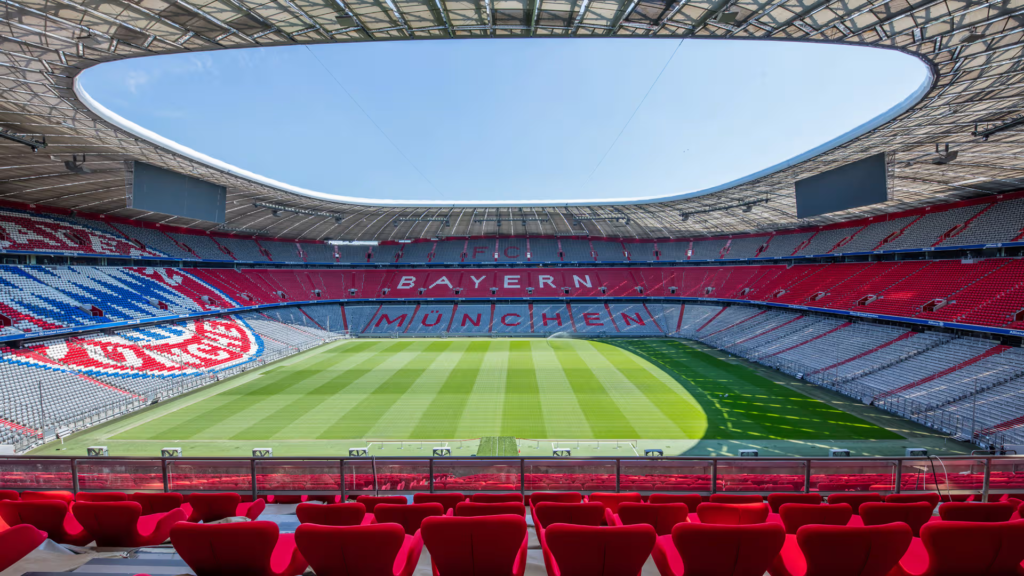
    2. Allianz Arena, Germany

    Located in Munich city in Germany is the Allianz Arena for its modern look and feel since its opening, in 2005.The stadiums outer surface is adorned with inflated ETFE plastic panels that have the ability to alter colors resultng in a glowing facade in shades of red,blue or white based on the team playing at home or the event taking place.This unique lighting design makes it a striking architectural marvel that can be spotted from distances.

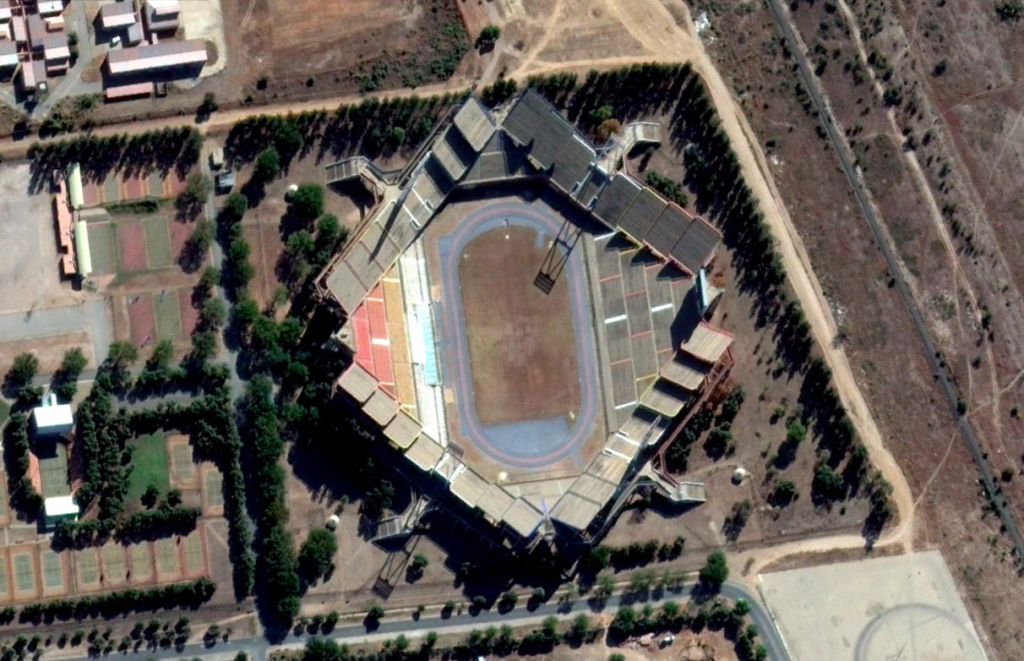
    3. Mmabatho Stadium, South Africa

    Mmabatho Stadium was constructed in the year 1981 in Mafikeng in South Africa. Is famed for its unique and rather puzzling architectural style.The stadium presents stands characterized by angles and a layout that deviates from conventional architectural standards.Even though it has the ability to accommodate, up to 60 000 spectators the stadium sees use presently serving as a symbol of daring design preferences that might not be entirely practical.

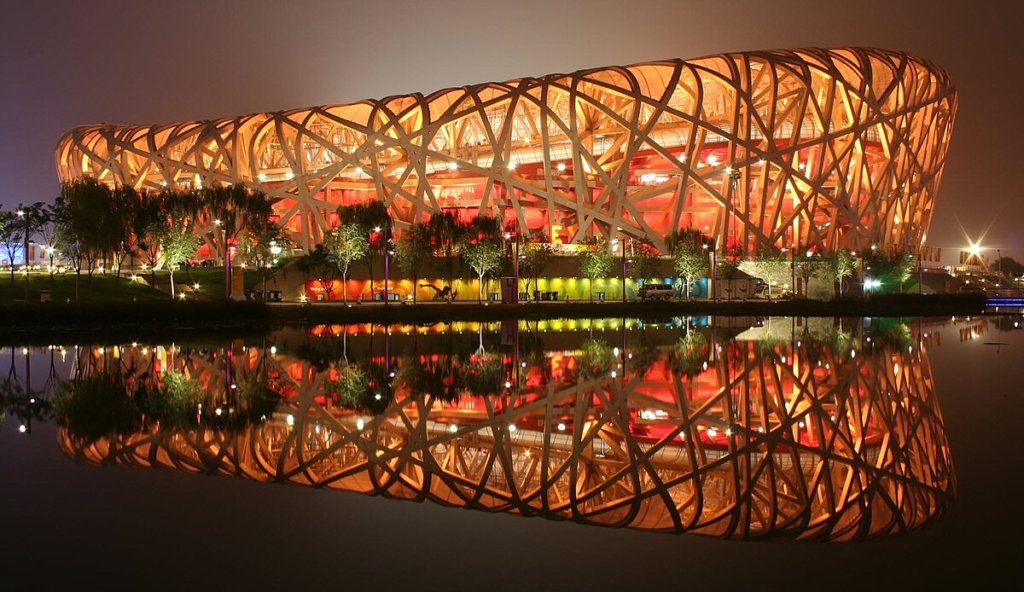
    4. Beijing National Stadium (Bird’s Nest), China

    The “Birds Nest,” officially named the Beijing National Stadium and built for the 2008 Beijing Olympics is truly an architectural wonder with its intricate steel framework that mimics a birds nest. Representing a nurturing space for future aspirations.The blend of practicality and artistic flair, in its design has elevated it to be recognized as one of the renowned stadiums worldwide.

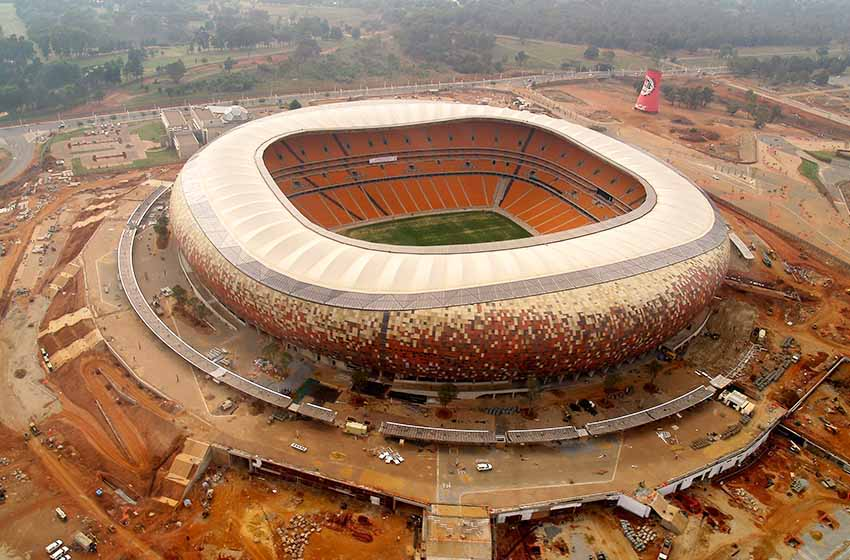
    5. FNB Stadium, South Africa

    Dubbed as Soccer City and located in Johannesburg is the location for the 2010 FIFA World Cup tournament—an event that drew worldwide attention at the time It takes inspiration from the African calabash fruit for its design and features a facade that evokes the image of a vibrant fire when lit up during nighttime hours This blend of cultural representation, with modern conveniences creates a truly unique mix of old customs and modern architectural elements

    6. Estadio Municipal de Braga, Portugal

    This stadium in Bragas quarry in Portugal is famous for its simple design elements etched into the rock walls and connected by steel cables forming two lateral stands overlooking the natural backdrop of the quarry landscape – blending nature and architecture seamlessly to provide a distinctive and picturesque setting, for sports activities.

    7. Sapporo Dome, Japan

    The Sapporo Dome in Japan stands out for its adaptability and impressive engineering design features.The venue is equipped with a grass field that can be moved in and out of the dome as needed to accommodate various events such as football and baseball games.This unique design not only provides ideal playing conditions for different sports but also ensures a uniform and enjoyable experience, for spectators attending the games.

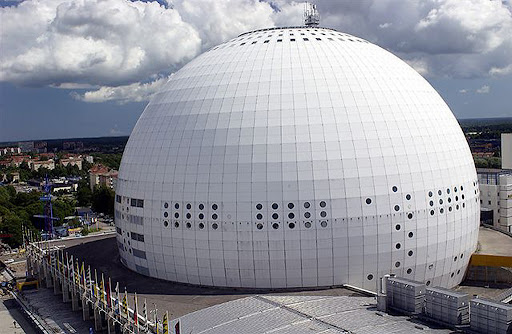
    8. Ericsson Globe, Sweden

    Situated in Stockholm, Sweden, the Ericsson Globe is the largest hemispherical building in the world. Its spherical shape represents the Sun in the Sweden Solar System, the world’s largest scale model of the solar system. The interior is versatile, hosting a range of events from ice hockey to concerts, all under its distinctive dome.

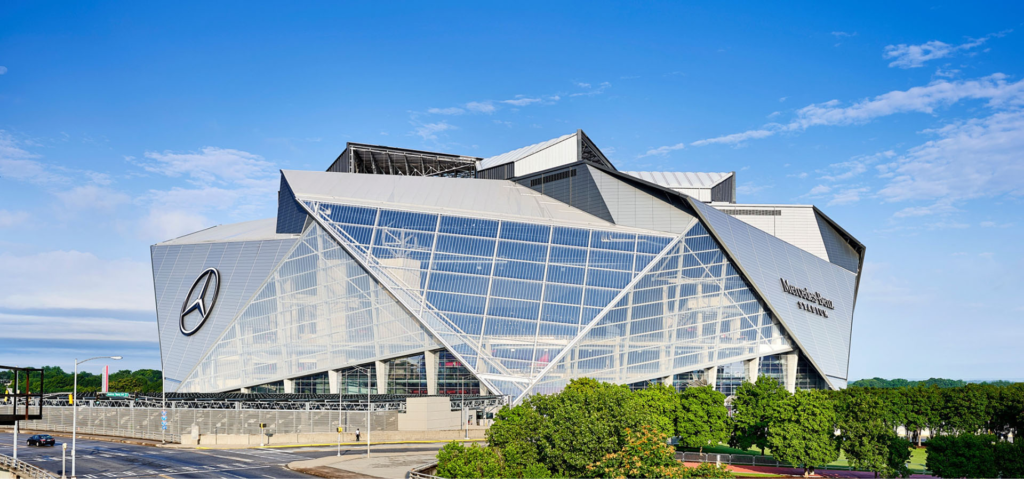
    9. Mercedes-Benz Stadium, USA

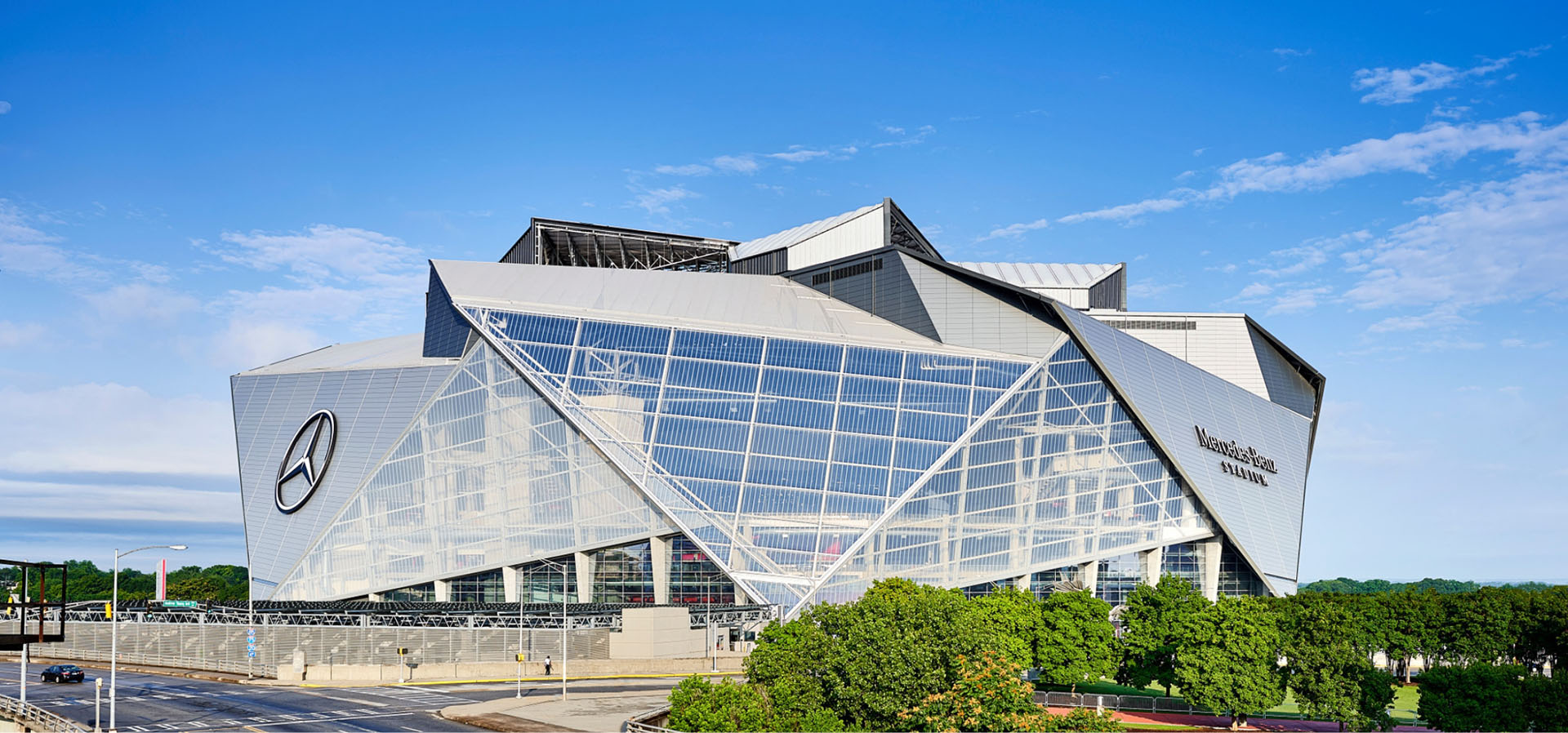
    Opened in 2017 in Atlanta, Georgia, the Mercedes-Benz Stadium is celebrated for its innovative design, particularly its retractable roof that opens and closes like a camera aperture. The stadium also features a 360-degree halo video board, providing an immersive experience for spectators. Its modern architecture and state-of-the-art facilities set new standards for multi-purpose stadiums.

    10. Kaohsiung National Stadium, Taiwan

    Located in Kaohsiung, Taiwan, this stadium is notable for its eco-friendly design. The structure spirals into a shape reminiscent of a dragon and is covered with solar panels that provide a significant portion of the stadium’s energy needs. This commitment to sustainability, combined with its striking appearance, makes it a model for environmentally conscious architectural design.

    These stadiums exemplify how architectural innovation can transform sports venues into iconic landmarks. Their unique designs not only enhance the spectator experience but also reflect cultural identities and technological advancements, contributing to the rich tapestry of global architectural achievements.